
Why 750 Is the Number Everyone Talks About
Ask anyone chasing Real Estate Professional status what they are aiming for, and the first thing out of their mouth is usually "750 hours." It has become the headline number, the finish-line tape, the figure scribbled on the back of a napkin during a real estate meetup. And it deserves the attention: more than 750 hours of qualifying work in a single tax year is one of the two hard requirements that separate a real estate professional from an ordinary investor in the eyes of the IRS.
But the number is also widely misunderstood. People treat 750 hours as if it were the whole exam when it is really just one question on a two-part test. They imagine it as a year-end sprint when the calendar quietly demands a steady cadence. And most damaging of all, they assume that hitting 750 hours wins them the prize, when in reality it only gets them to the starting line of a second, separate hurdle.
This article is about the 750-hour test itself, and nothing else. We will translate the annual figure into a weekly and monthly rhythm, describe what carrying that rhythm actually feels like across a real year, and explain precisely why crossing 750 is necessary but never sufficient. If you understand this one number deeply, the rest of the REP puzzle gets a lot easier to see.
What the 750-Hour Test Actually Requires
Strip away the folklore and the statutory language is narrow. To meet this prong, you must perform more than 750 hours of services during the tax year in real property trades or businesses in which you materially participate. Three phrases in that sentence do all the work, and each one trips people up.
- "More than 750 hours" means 751 hours is the floor, not a target you can round up to. The count is per individual and per tax year; hours do not carry over from one year to the next.
- "Real property trades or businesses" is a defined category that includes things like development, construction, acquisition, conversion, rental, operation, management, leasing, and brokerage. Hours spent outside these categories simply do not count.
- "In which you materially participate" means the 750 hours must come from activities you are genuinely involved in, not passive ownership where someone else does all the work.
A common misread: the 750 hours do not all have to come from a single property or business. You can combine qualifying hours across every real property trade or business in which you materially participate. What you cannot do is fold in hours from your W-2 job, your side consulting gig, or any non-real-estate work.
It is also worth saying plainly what the test is for. Real Estate Professional status removes the automatic assumption that your rental activities are passive. That single change is what eventually lets rental losses offset active income such as wages. The 750-hour test is the volume requirement that proves your involvement is substantial enough to deserve that treatment.
Translating 750 Hours Into a Weekly and Monthly Rhythm
Seven hundred fifty hours sounds abstract until you divide it across the year. Spread evenly, the math is sobering and clarifying at the same time.
If you pace it evenly
- Per week: about 14 to 15 hours of qualifying real estate work, every week, for 52 weeks
- Per month: roughly 62.5 hours of qualifying work each month
- Per workday: a little over 2 hours a day if you work five days a week
- Across the year: a sustained part-time job's worth of real estate activity
Why the cadence matters
- An even rhythm produces a credible, defensible record
- Lumpy logs with a suspicious year-end surge invite scrutiny
- Gaps of several empty months are hard to explain later
- Steady weekly habits make contemporaneous logging effortless
Nobody actually logs an identical 14.4 hours every week. Real life is lumpy: a renovation month might consume 120 hours while a quiet winter month barely reaches 30. That variation is fine and expected. The point of the weekly and monthly figures is not to impose a rigid quota but to give you a gut-check pace. If you reach July and you are sitting at 180 hours, the arithmetic is telling you that hitting 750 by December will require a heavier second half than you may have planned for.
Think of the monthly number as a dashboard gauge. At roughly 62.5 hours a month you finish the year comfortably above 750. Drift below that for too many months in a row and the gap compounds quietly until it is too large to close honestly.
This is exactly the kind of running tally that is painful to reconstruct from memory and easy to maintain in the moment. REP Helper keeps a live count of your qualifying hours as you log them by phone, voice, or web, so the weekly and monthly cadence stays visible all year instead of becoming a frantic spreadsheet exercise in March.
What 750 Hours Feels Like in Practice
Numbers on a page understate the lived experience. Fourteen to fifteen hours a week of genuine, hands-on real estate work is a real commitment that competes with weekends, evenings, and the attention you would otherwise give to family, rest, or another income stream.
For someone with a substantial portfolio and no other job, 750 hours can feel almost incidental: managing tenants, coordinating turnovers, overseeing renovations, and handling leasing across several properties adds up quickly. For someone with a demanding W-2 job and one or two rentals, the same 750 hours can feel nearly impossible, because the time has to be carved out of an already full life and because the activities at that scale rarely generate that many legitimate hours in the first place.
Hours that genuinely accumulate
- Showing units, screening applicants, and signing leases
- On-site renovation oversight and contractor coordination
- Property acquisition research, walkthroughs, and closings you actively work
- Bookkeeping, vendor management, and operational decision-making
Where the hours quietly fall short
- A single turnkey rental with a property manager doing the work
- Time spent driving with no documented real estate purpose
- Generic education or webinars not tied to your activities
- Investor research that looks more like passive study than a trade
The honest takeaway is that 750 hours is not a paperwork formality you back into at year-end. It is a level of involvement that should be visible in how you actually spend your weeks. If you cannot picture where 14 to 15 hours a week of real estate work comes from in your life, that is a signal worth taking seriously before you claim the status.
Necessary, But Not Sufficient: The Second Gate
Here is the single most important thing to understand about 750 hours, and the part most often missed: clearing it does not finish the job. The 750-hour test is one of two requirements for Real Estate Professional status, and REP status by itself only opens the door to a further test.
First, REP status requires both prongs in the same tax year. You need more than 750 hours, AND you need more than 50 percent of all your personal-service (working) hours to be in real property trades or businesses. A surgeon who logs 800 real estate hours but also works 2,000 hours in the operating room fails the 50 percent test even though the 750 number was cleared. The two tests are independent locks on the same door.
Second, and just as critical: even after you qualify as a real estate professional, your rental losses are not automatically deductible against active income. REP status only removes the presumption that rentals are passive. To make the losses non-passive, you must separately materially participate in each rental activity, judged under the seven tests of the material participation rules (most commonly the 500-hour test). REP and material participation are two different gates, and the 750 hours you logged for the first does not automatically satisfy the second.
The order matters. 750 hours plus the 50 percent test gives you REP status. REP status plus material participation in your rentals (per activity, or per group if you make the grouping election) gives you deductible losses. Skip the last step and you can be a real estate professional with losses still trapped as passive.
Many investors who own several properties solve the material participation problem by making the grouping election, which lets all rentals be treated as one activity so a single 500-hour material participation test can apply across the portfolio. That election is filed by statement attached to the return and is generally irrevocable, so it is worth discussing with your tax advisor before you rely on it. The relevant point here is simply that 750 hours is the entrance exam, not the diploma.
Counting the 750 Hours Without Fooling Yourself
Because the number is a threshold you either cross or you do not, the integrity of the count is everything. The IRS does not accept a confident assertion of "about 800 hours." It expects hours that can be tied to specific activities on specific dates, and it has successfully challenged taxpayers whose totals were built on estimates and reconstructed calendars.
- Record the date, the property or business, the activity, and the duration for each entry
- Log entries as the work happens, not in a year-end reconstruction from memory
- Keep only hours in real property trades or businesses where you materially participate
- Exclude commuting, generic education, and time someone else (manager or contractor) performed
- Watch the cadence so the record shows steady involvement, not an implausible December spike
- Track your non-real-estate working hours too, so you can prove the 50 percent test alongside the 750
Notice the last item on that checklist. The 750-hour count and the 50 percent ratio are intertwined: you cannot prove you spent more than half your working hours on real estate unless you also know your total working hours. This is precisely why a back-of-the-envelope approach falls apart, and why contemporaneous tracking that captures both sides of the ledger is so valuable.
REP Helper is built for this exact problem. Logging takes seconds by phone or voice in the moment, each entry is tagged by activity and by who performed it, and the tool tracks both your real estate hours and your outside working hours so the 50 percent ratio updates live alongside the 750-hour progress bar. When the year closes, the CPA-ready export hands your advisor a record that was built as the work happened rather than assembled under pressure.
Common Mistakes Around the 750-Hour Line
The failures cluster into a handful of predictable patterns. Recognizing them is half the battle.
- Treating 750 as the finish line. As covered above, it is one of two REP prongs and does not satisfy material participation on its own.
- Counting investor or management activities for a property where a manager does the real work, then being unable to defend the hours as your own material participation.
- Padding the log with hours that are not in a real property trade or business, such as personal financial planning or unrelated study.
- Backloading the year, producing a record that shows little activity until a dramatic year-end surge that strains credibility.
- Ignoring the 50 percent test entirely and assuming that a big absolute hour count is enough to qualify.
- Reconstructing the entire year from memory in spring, which is exactly the kind of record that has lost in Tax Court.
The most expensive mistake is the quiet one: believing you have qualified because you cleared 750 hours, claiming the losses, and only discovering during an audit that you never separately documented material participation in the rentals. The hours were real; the deduction still failed.
A Simple Year-Long Plan to Stay Above the Line
If the test rewards steady cadence, then the strategy is to bake the cadence into your calendar rather than chase the number at the end. A loose quarterly rhythm keeps you honest without turning your life into a stopwatch.
Checkpoints through the year
- End of Q1: aim for roughly 185 to 190 hours logged
- Midyear: aim for roughly 375 hours, the halfway mark
- End of Q3: aim for roughly 560 to 565 hours
- Year-end: comfortably past 750 with a clean, dated record
Habits that make it stick
- Log every real estate task the moment it ends
- Review your running total monthly, not annually
- Note who performed each task to protect material participation
- Keep an eye on the 50 percent ratio as outside hours change
These checkpoint figures are illustrative pacing guides, not legal thresholds. The only number the statute cares about is more than 750 by year-end. But a quarterly gut-check turns a daunting annual figure into four manageable stretches, and it surfaces a shortfall while you still have months to address it honestly rather than weeks to manufacture it dishonestly.
Frequently Asked Questions
Q: Is it exactly 750 hours, or more than 750?
A: The requirement is more than 750 hours of services during the tax year in real property trades or businesses in which you materially participate. Treat 750 as a floor you must clear, not a target to land on. Building in a comfortable margin above 750 is wise, because the count must survive scrutiny and a number that sits right on the line invites challenge.
Q: Can I count hours from my spouse or a contractor toward my 750?
A: No. The 750-hour test is applied to you as an individual, so only your own hours count toward your number. Your spouse's hours are counted for the spouse's own REP determination on a joint return, and contractor or property-manager hours are not yours at all. This is why tagging each activity by who performed it is so important when you keep your log.
Q: I cleared 750 hours. Are my rental losses now deductible against my salary?
A: Not automatically. Clearing 750 hours is one of two requirements for Real Estate Professional status, and you also need more than 50 percent of your working hours in real property trades or businesses. Even once you qualify as a real estate professional, you must separately materially participate in your rental activities (per property, or per group if you make the grouping election) before the losses become non-passive. The 750 hours open the door; material participation walks you through it.
Q: Do short-term rental hours count toward the 750?
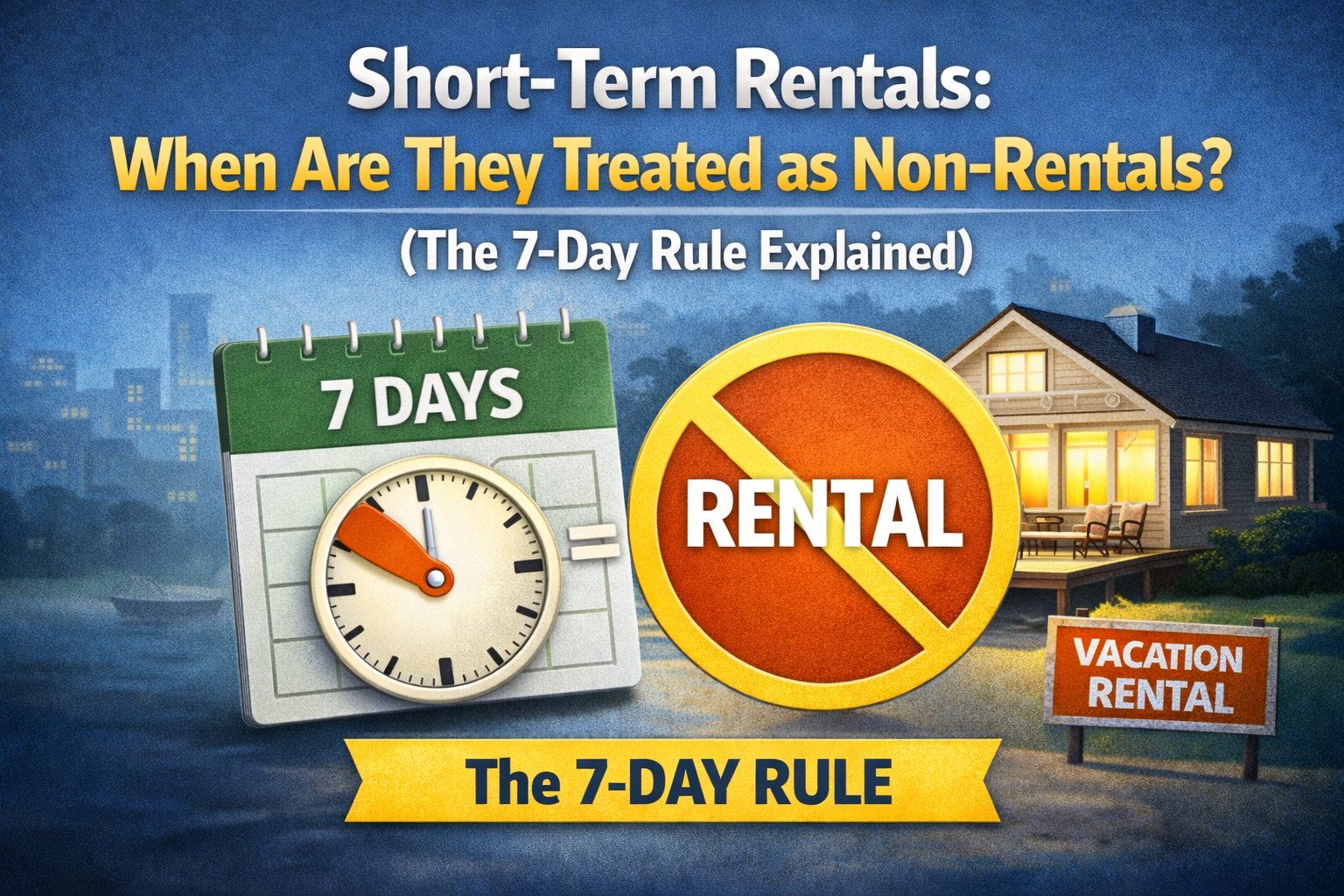
A: Hours of genuine, material involvement in a real property trade or business generally count, including operating short-term rentals. There is a separate nuance worth knowing: if a property's average guest stay is seven days or less, it may not be treated as a rental activity at all, which can change whether you even need REP status for it. That interaction is technical, so confirm the treatment of your specific properties with your tax advisor.
Q: How do I prove I actually hit 750 hours if I get audited?
A: With a contemporaneous record: dated entries created as the work happened, each tied to a specific property, activity, and duration. Reconstructed estimates assembled at filing time are the records that tend to fail. Tools like REP Helper exist precisely because building that record in the moment, with the running total and the 50 percent ratio always visible, is far more defensible than recreating a year from memory.
About the author

Real Estate Investor · Founder, REP Helper
Carlos Lourenço is a real estate investor and the founder of REP Helper. Over 10+ years he's built a portfolio of long- and short-term rentals across several states, personally qualifying for Real Estate Professional Status (REPS) and running the short-term-rental strategy on his own properties. A product manager by trade, he built REP Helper after years of tracking his own hours and IRS tests by hand.
Connect on LinkedInDisclaimer: Carlos Lourenço is a real estate investor, not a CPA, enrolled agent, or tax attorney. This article is for educational purposes only and is not tax, legal, or financial advice. Tax outcomes depend on your specific facts and on current law, which changes. Always consult a qualified CPA or tax attorney before implementing any tax strategy.